
Patchwork, woodwork and the veg patch.
Adventures in foraging frugally and scavenging sustainably while living and eating well.
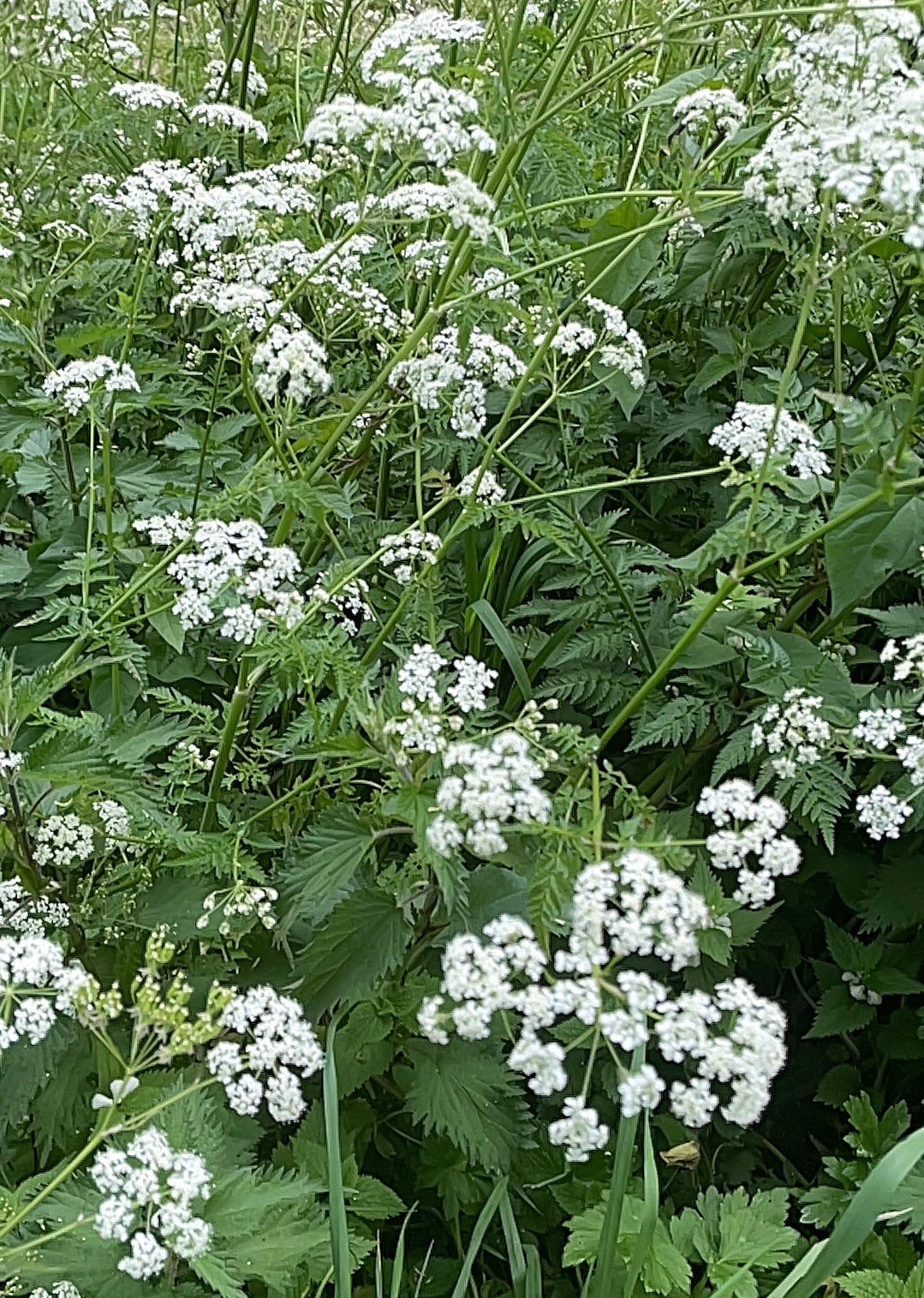
It has been a week of pleasant odds and ends, mostly unplanned and all the better for it. We made last minute decisions to go out to hear live music and really should do that more often. Lovely friends came visiting for the weekend which meant feasting, quaffing, wandering about York and much good talk.
At the car boot sale on Sunday I met a woman selling jam pot covers and labels at a fraction of the price charged in shops. She used to do piecework for a pittance, counting paper goods into packets at tuppence a bag. It drove her to distraction. These days she’s cutting out the middlemen.
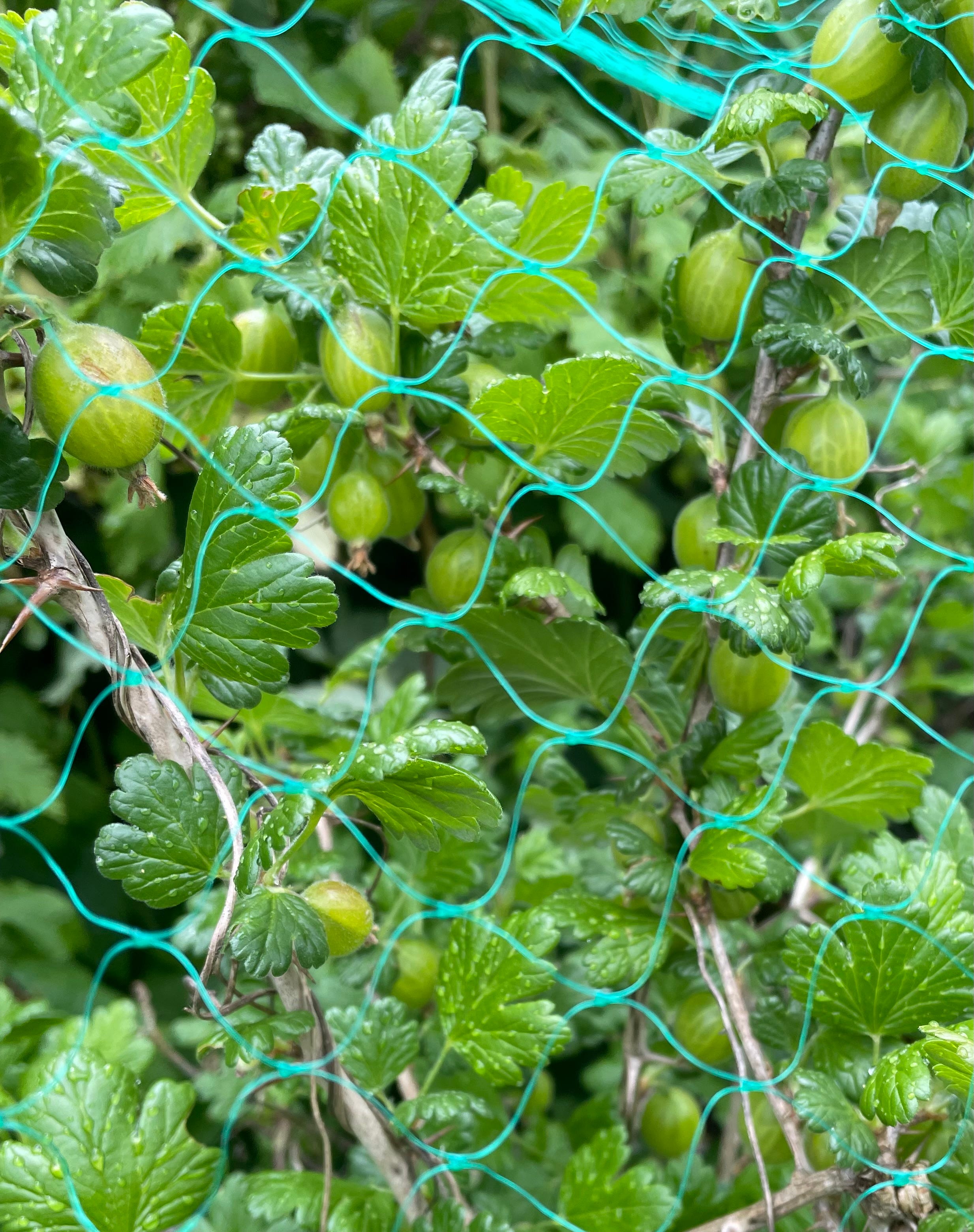
On the veg patch, peas, lettuce, radish, sweetcorn, potatoes, onions, leeks, broad beans are planted and look reasonably healthy. The currant and gooseberry bushes have been netted. Pigeons may look longingly at ripening berries but won’t be able to feast as freely as they did last year.
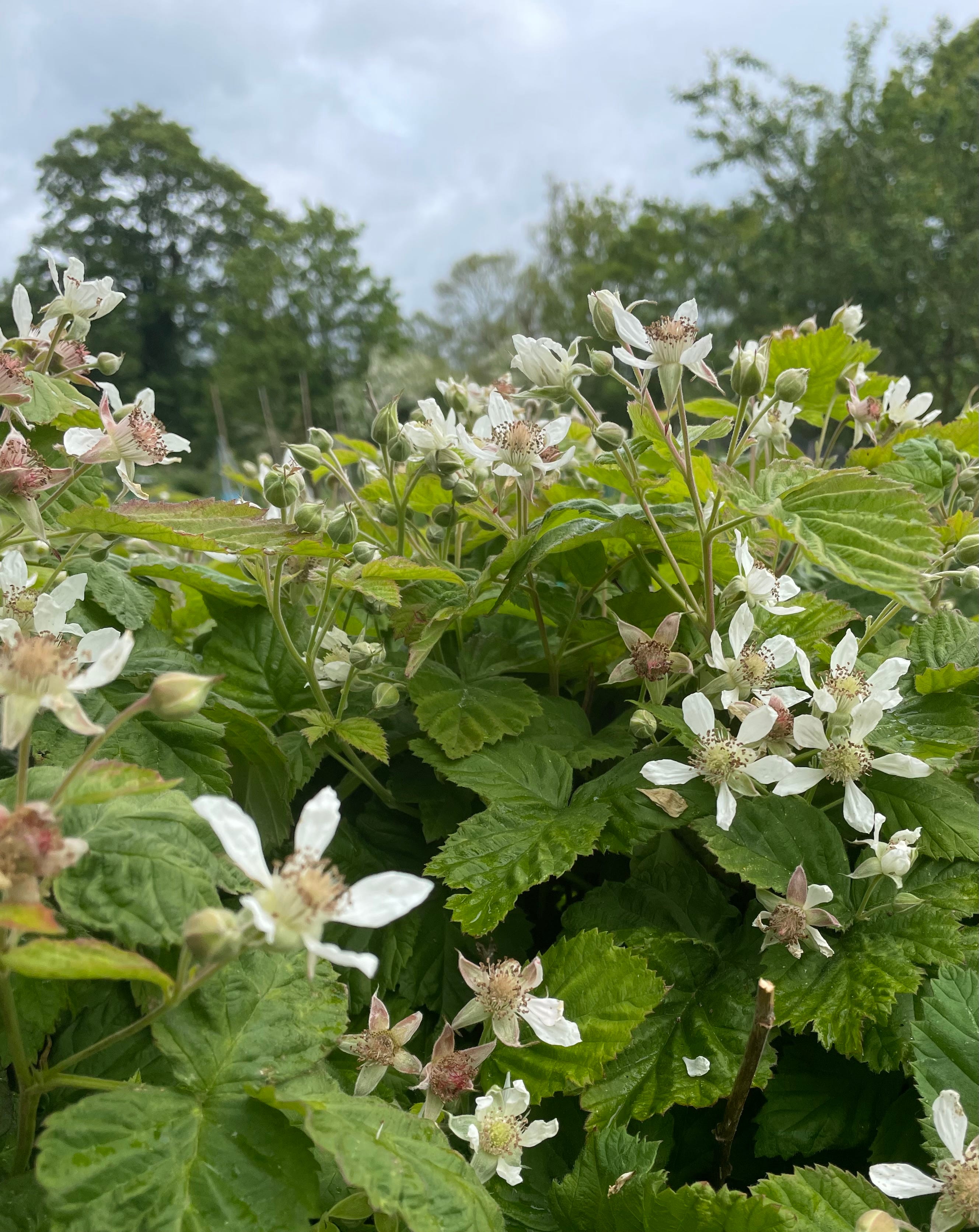
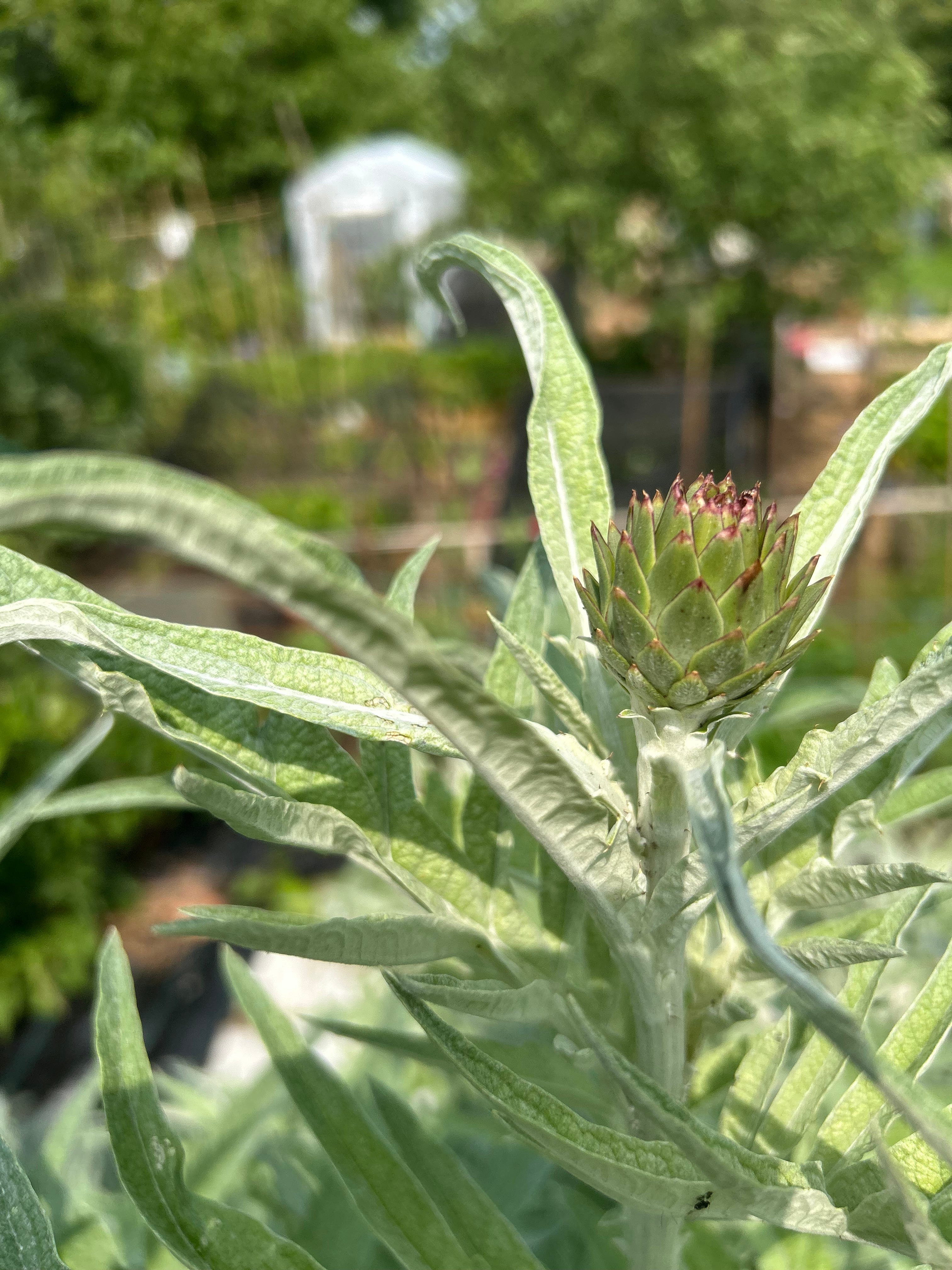
The globe artichoke has taken off and, despite my valiant efforts to clear it, the Jerusalem artichoke patch will persist. I’m keeping my eye on the elder bushes. It will soon be elderflower cordial making time.
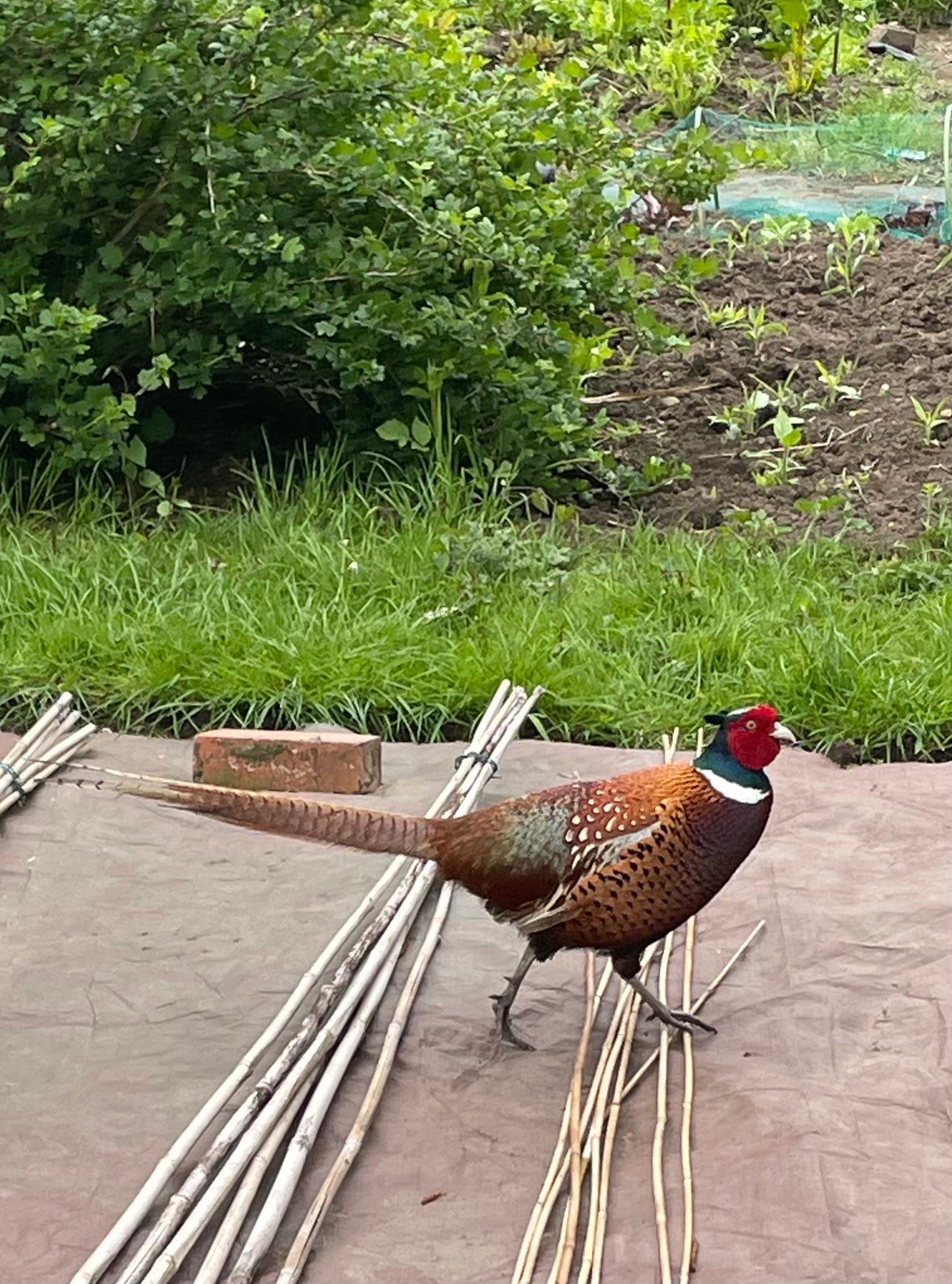
While I try to bring the allotment plot into some semblance of order, the cock pheasant is a constant presence. He spends a great deal of time on sentry duty atop Steve’s cold frame. Glimpses of his hen partner are rarer. It’s nesting season so it wouldn’t surprise me if there is a clutch of eggs not too far away.
In the bookshop
On Monday mornings you will usually find me working in York’s Amnesty International Bookshop. It’s a dangerous place for a reader who lacks the will power to resist an enticing title. Yet I didn’t succumb to Do-It-Yourself Coffins, pitched at ‘woodworkers who want to be buried in their work’, though the project seems to be the ultimate in thrift. Friends and family will confirm that I should never be let loose on a tool box containing sharp objects. Ours is a household that practices ‘Destroy-it-Yourself’. I comfort myself with the knowledge that it is always possible to cover the holes created by the slapdash use of a hand power tool with a new picture.
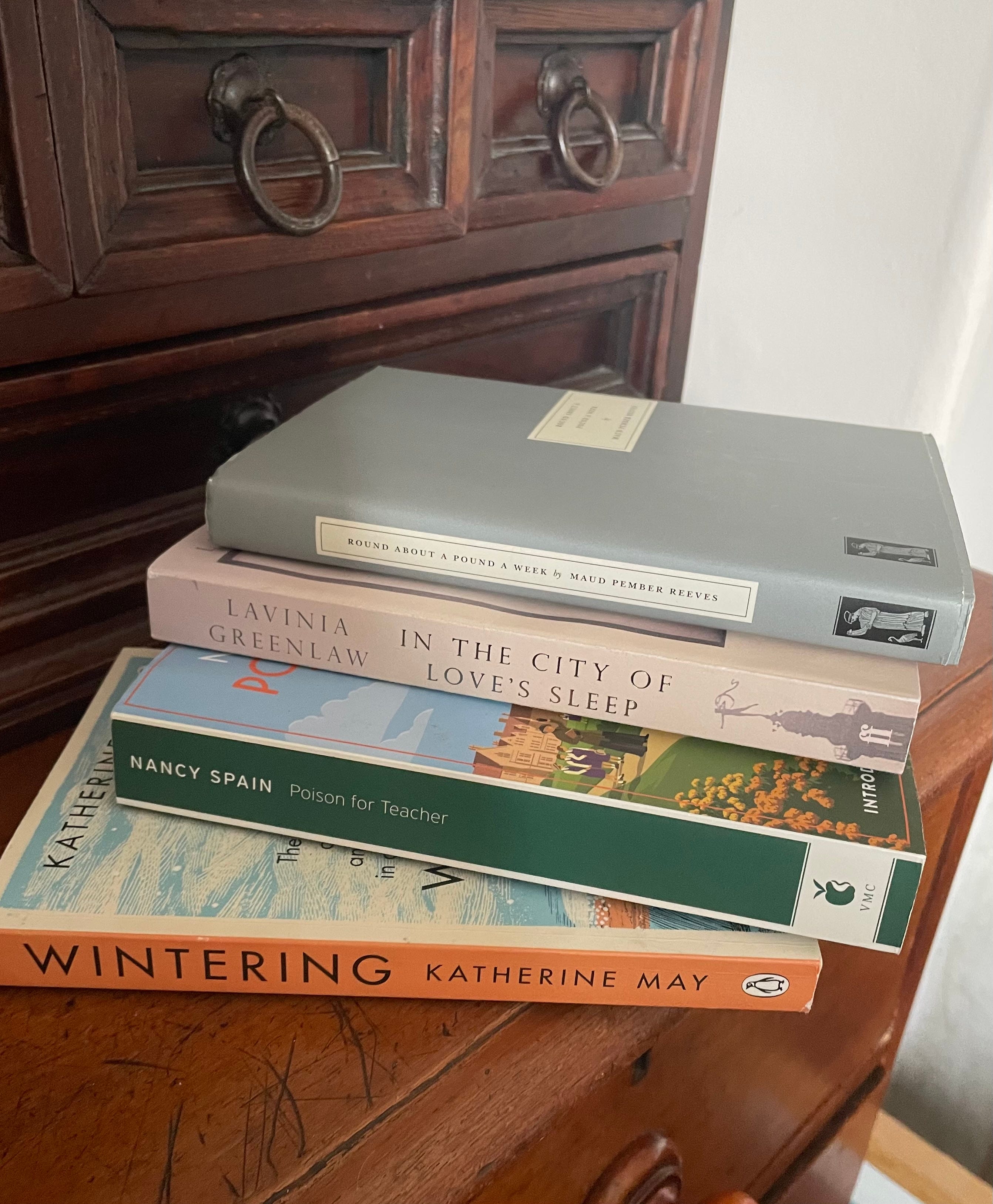
One of the books I didn’t resist this week (pictured above) contained a postcard as a bookmark. In 1916, Kenneth, a schoolboy from Halifax, sent it to his aunts to say ‘hello’. There is no mention of war though it must have been on everyone’s mind.

A woman came into the shop and said she had a bone to pick. I did my best to look concerned and sympathetic as I dealt with my first bookshop customer complaint. ‘I bought a biography here and I need to let you know that it has a typo. It’s not good enough’, she started. ‘That’s a matter you should really refer to the publisher?’ said I. The woman considered my suggestion and retreated, still outraged. The next customer who came in wanted to pass on thanks to one of the weekend volunteers who had looked after her when she fell outside the shop and smashed her nose. For every brickbat there’s a bouquet.
The Patchwork Quilt
Here is this patchwork quilt I've made
Of patterned silks and old brocade,
Small faded rags in memory rich
Sewn each to each with feather stitch,
But if you stare aghast perhaps
At certain muddied khaki scraps
Or trophy-fragments of field grey,
Clotted and torn, a grim display
That never decked white sheets before,
Blame my dazed head, blame bloody war.

Robert Graves
I come from a family of excellent needlewomen, crafty people who can turn their hands to making and mending almost anything. I am not one of them. Though I can click knitting needles and twirl my crochet hook with the best, when it comes to piecing things together I’m hopeless. My hemming will never be marvelled over. No prizes will be awarded from my petit point. My walls are not hung (as are other households in the Cotter family) with homemade textile art.
I often find inexpensive needlework pieces for sale and, if they look interesting — the twee or sweetly pretty are not for me — I buy them for stitch-loving family members. These pieces took enormous patience, time and skill to make and it seems a shame to see them on the scrap heap. The saddest items are those not completed because the maker ran out of time. Dead aunts and mothers’ sewing baskets, embroidery silks, tapestry wool and canvases can be found at almost any weekend car boot sale.
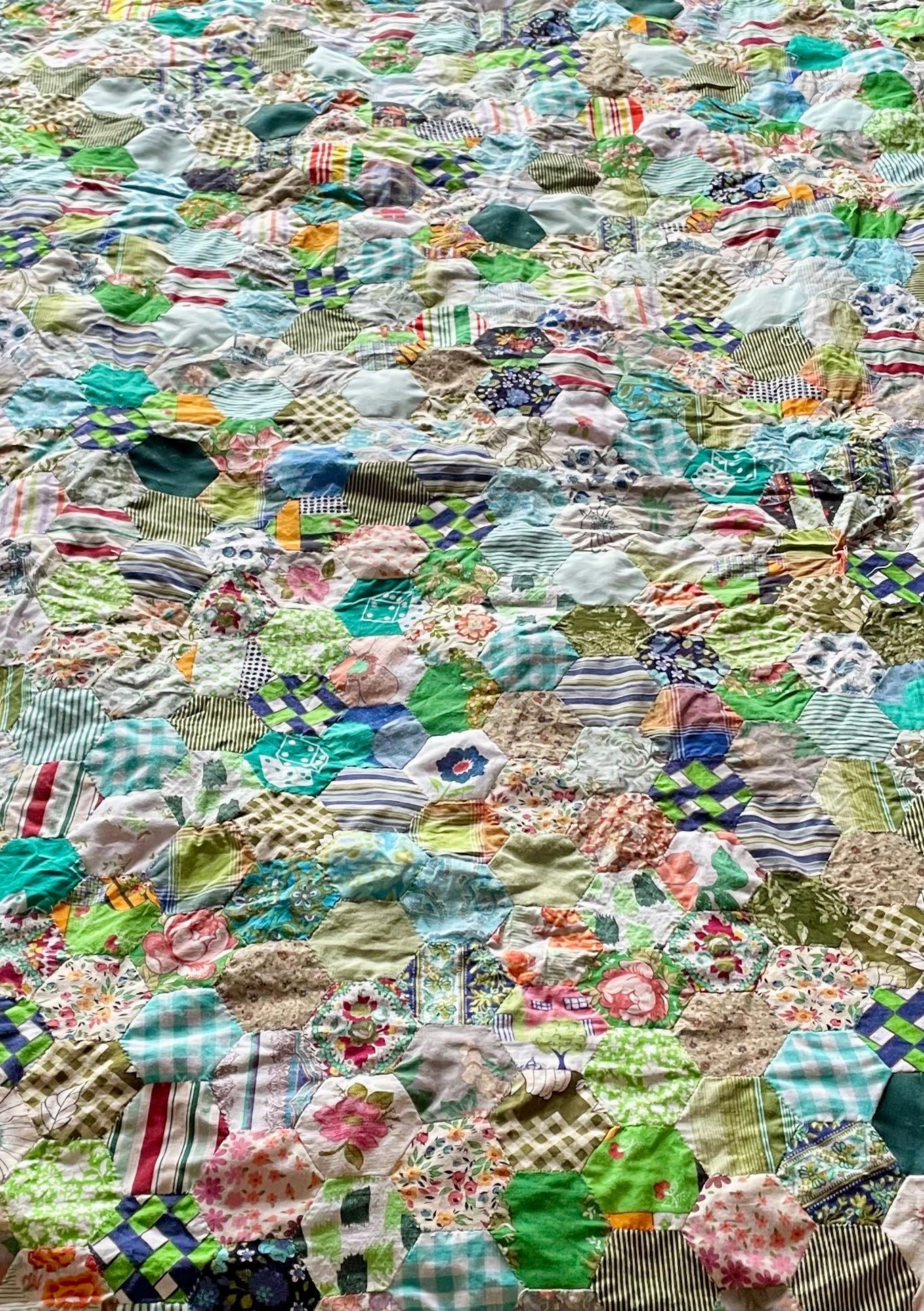
When I saw some patchwork in a charity shop last week I turned to my youngest sister for advice. She is a splendid seamstress, a trained tailor who, unlike me, has never been reduced to tears by a sewing machine. The carefully pieced together hexagons have the potential to make a bedspread for a baby. My talented sister promised to rescue it for me so I parcelled it up and it has already found its way to county Cork.
Two Substackers whose writing I enjoy, R. Chavez (an expert quilter) and Fran Gardner (a joyful mender), may be interested in seeing the finished quilt when it is done.
Writing from the ragbag
All this talk about patchworks makes me wonder why Substack hasn’t got a ‘miscellaneous’ category. In my posts you are likely to find flowers, food, foraging, growing, gathering, gallivanting, poetry, perambulations and perhaps a picture or two. It is hard to pigeonhole many of my favourite Substackers. What is a magpie meanderer to do? Are others frustrated by reductive algorithms which make it hard to fit in? Does it matter a whit if they don’t?
Like your thought on the algorithms issue. I am a bit like you I think, jack of all trades. I am not going to loose sleep over it though. Had enough of that algorithm lark in higher education! We got our seeds and sets into the raised bed at long last - onions, beetroot, leeks and carrots. Birds are a nightmare though so heavy green netting has been applied. That's the best ever - a customer complaining over a typo 🥺😆
I find the idea of secondhand, mended quilts really beautiful; A garment with memory getting a new lease on life!